
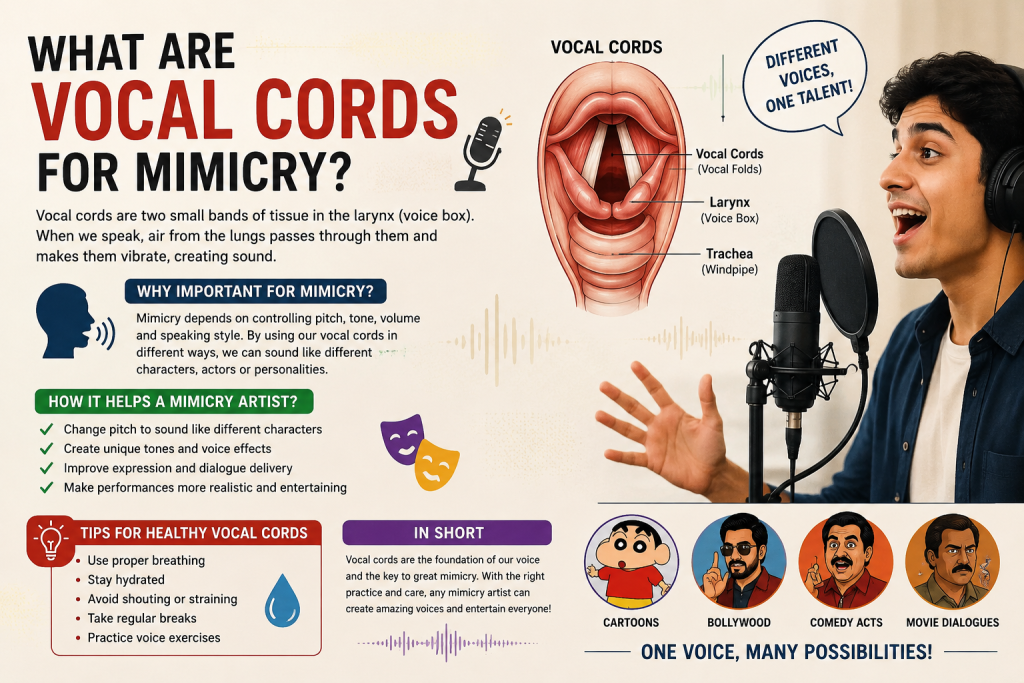
Vocal cords, also known as vocal folds, are two small bands of tissue located inside the larynx, or voice box. They play an important role in producing the human voice. When we speak, air from the lungs passes through the vocal cords and makes them vibrate, creating sound. The shape, tension and movement of the vocal cords influence the pitch and quality of our voice.
For mimicry artists, understanding vocal cords is especially important because voice imitation depends on controlling pitch, tone, volume and speaking style. A mimicry artist may change the pitch of their voice to sound like a cartoon character, actor or other personality. By learning how to control their voice safely and naturally, performers can create different vocal effects and make their performances more entertaining.
However, vocal cords should not be forced or overworked. Excessive shouting, continuous high-pitched sounds or improper voice techniques can put unnecessary strain on the voice. Proper breathing, regular practice, hydration and taking breaks can help support healthy voice use.
In conclusion, vocal cords are the foundation of our voice and are an important part of mimicry. With proper practice and good voice control, a mimicry artist can explore different tones and styles while keeping their performance natural and engaging.